Building a SaaS product has never been easier.
A few years ago, launching a startup required a team of developers, designers, marketers, and a significant budget. Today, a solo founder or small team can validate an idea, build an MVP, and launch to real users in less than a month.
The biggest reason? AI.
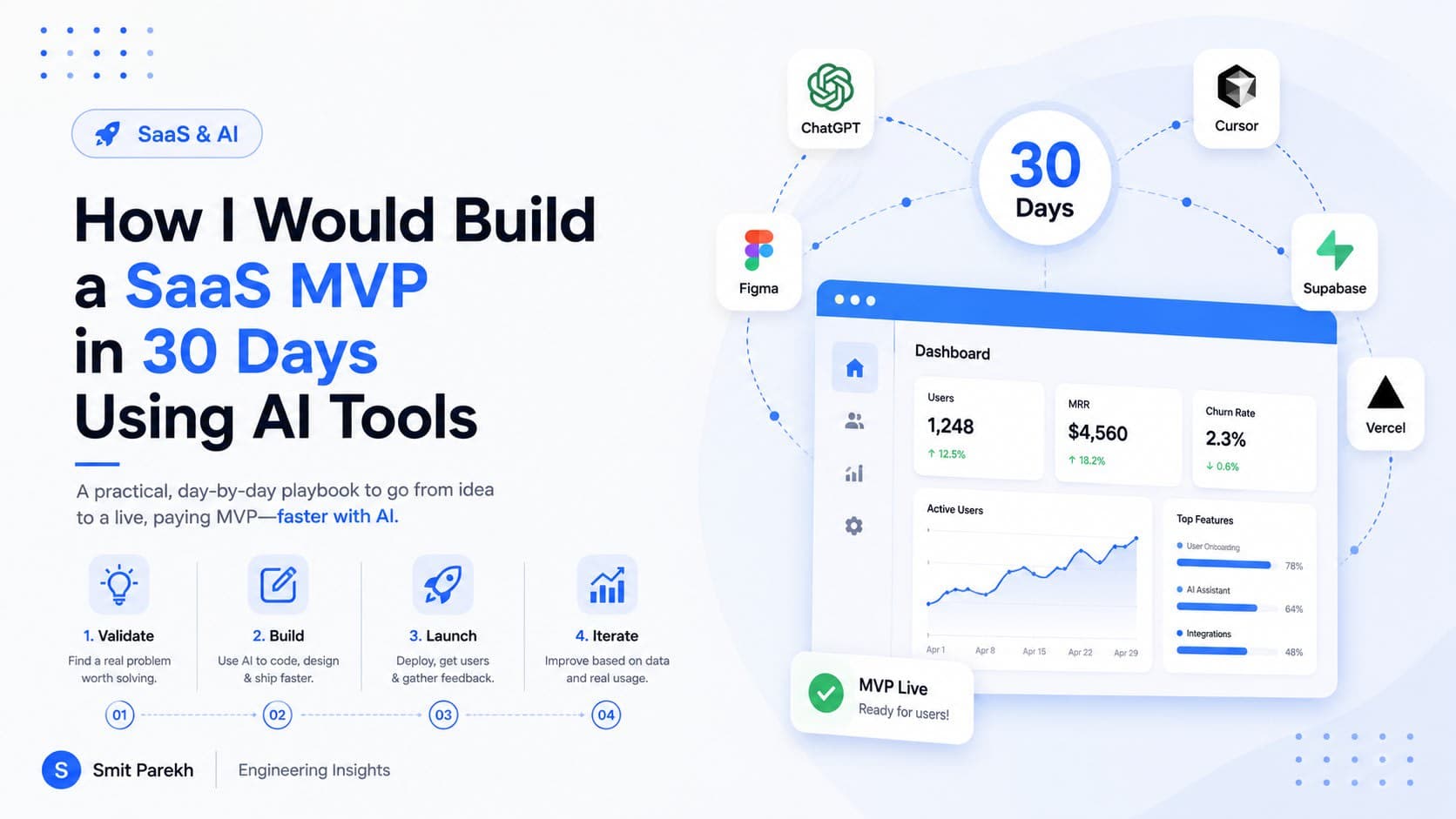
Tools like Claude, ChatGPT, and Cursor have dramatically reduced the time required to write code, create content, design interfaces, and solve technical problems. Combined with modern platforms like Next.js, Supabase, and Vercel, founders can move from idea to production faster than ever.
If I were starting a new SaaS product today, this is exactly how I would build an MVP in 30 days.
Why Speed Matters More Than Perfection
Most startups fail because they spend too much time building features nobody wants.
The goal of an MVP is not to create a perfect product.
The goal is to:
- Validate demand
- Get real users
- Collect feedback
- Find product-market fit
- Generate initial revenue
Everything else can wait.
Instead of spending six months building every feature imaginable, I would focus on solving one specific problem extremely well.
My Modern SaaS Stack
For almost every SaaS MVP today, I would choose:
- Next.js for frontend and backend
- TypeScript for type safety
- Supabase for database, authentication, storage, and APIs
- Vercel for deployment
- Stripe for payments
- Resend for transactional emails
- Claude for architecture and reasoning
- ChatGPT for research and implementation help
- Cursor for AI-powered coding
This stack has become one of the most popular startup combinations because it offers rapid development, low operational costs, and excellent scalability. Modern SaaS builders increasingly rely on Next.js, Supabase, and Vercel as their foundation.
Days 1–3: Validate the Idea
Before writing a single line of code, I would validate the problem.
Many founders make the mistake of falling in love with a solution before understanding the problem.
My validation process would look like this:
Use ChatGPT for Market Research
I would ask ChatGPT questions such as:
- Who experiences this problem?
- How are people solving it today?
- What competitors already exist?
- What are common complaints in reviews?
Use Claude for Deep Analysis
Claude excels at reasoning through business ideas.
I would upload competitor landing pages, pricing models, and feature lists, then ask Claude to identify gaps and opportunities.
Research Communities
I would spend time reading:
- Hacker News
- Indie Hackers
- Product Hunt comments
- LinkedIn discussions
The goal is simple:
Find recurring pain points people are already talking about.
By the end of Day 3, I want a clear answer to one question:
"Will someone pay for this?"
Days 4–6: Define the MVP Scope
This stage is critical.
Most projects fail because the scope grows too large.
I create three lists:
Must Have
Features required for the product to work.
Examples:
- Authentication
- Dashboard
- Core functionality
- Billing
Nice to Have
Features that improve the experience but are not required.
Examples:
- Notifications
- Analytics
- Advanced settings
Future Features
Everything else.
I intentionally ignore this list during MVP development.
A good MVP should feel surprisingly small.
Days 7–10: Design the Product
I am not a full-time designer, so I use AI to accelerate the process.
Generate UX Ideas with ChatGPT
I ask ChatGPT to:
- Create user flows
- Suggest dashboard layouts
- Improve onboarding experiences
- Generate microcopy
Use Claude for Product Reviews
Claude is excellent at reviewing designs and identifying usability issues.
I often provide screenshots and ask:
"What would confuse a first-time user?"
Create UI Components
I use modern component libraries and avoid building custom designs unless necessary.
The objective is functionality, not design awards.
Days 11–20: Build the MVP with Cursor
This is where development accelerates dramatically.
Cursor has become one of my favorite productivity tools.
Instead of manually writing boilerplate code, I focus on product decisions.
Build with Next.js
Next.js provides:
- Server-side rendering
- API routes
- Fast performance
- Excellent developer experience
It also integrates seamlessly with Vercel, the company behind the framework. Vercel continues to invest heavily in infrastructure and AI-focused developer tooling.
Use Supabase as the Backend
Supabase eliminates a huge amount of backend complexity.
With one platform I get:
- PostgreSQL database
- Authentication
- File storage
- Realtime capabilities
- Edge functions
This allows founders to avoid managing multiple services during the early stages of development. Supabase has become a widely adopted backend platform for startups and AI-powered applications.
Let AI Write Boilerplate
Typical prompts I use inside Cursor:
- "Create a secure authentication flow using Supabase."
- "Build a dashboard page with TypeScript."
- "Generate CRUD APIs for project management."
- "Refactor this component for performance."
AI handles repetitive work while I review and refine the output.
Use Claude for Architecture Reviews
Before implementing major features, I ask Claude to review:
- Database schemas
- API structures
- Authentication logic
- Scaling considerations
This often prevents costly mistakes later.
Days 21–23: Add Payments and Emails
No SaaS exists without revenue.
This phase focuses on monetization.
Stripe Integration
I implement:
- Subscription plans
- Checkout flows
- Billing portal access
- Webhooks
Transactional Emails
Using Resend, I create:
- Welcome emails
- Password resets
- Billing notifications
- Trial expiration reminders
At this stage, the product becomes commercially viable.
Days 24–26: Testing and Optimization
Many founders skip testing.
That is a mistake.
I spend several days:
- Testing every flow manually
- Fixing edge cases
- Reviewing mobile responsiveness
- Improving performance
- Optimizing onboarding
I also ask AI to identify potential bugs.
A useful prompt is:
"Review this codebase and identify potential security, performance, or scalability issues."
The feedback is often surprisingly valuable.
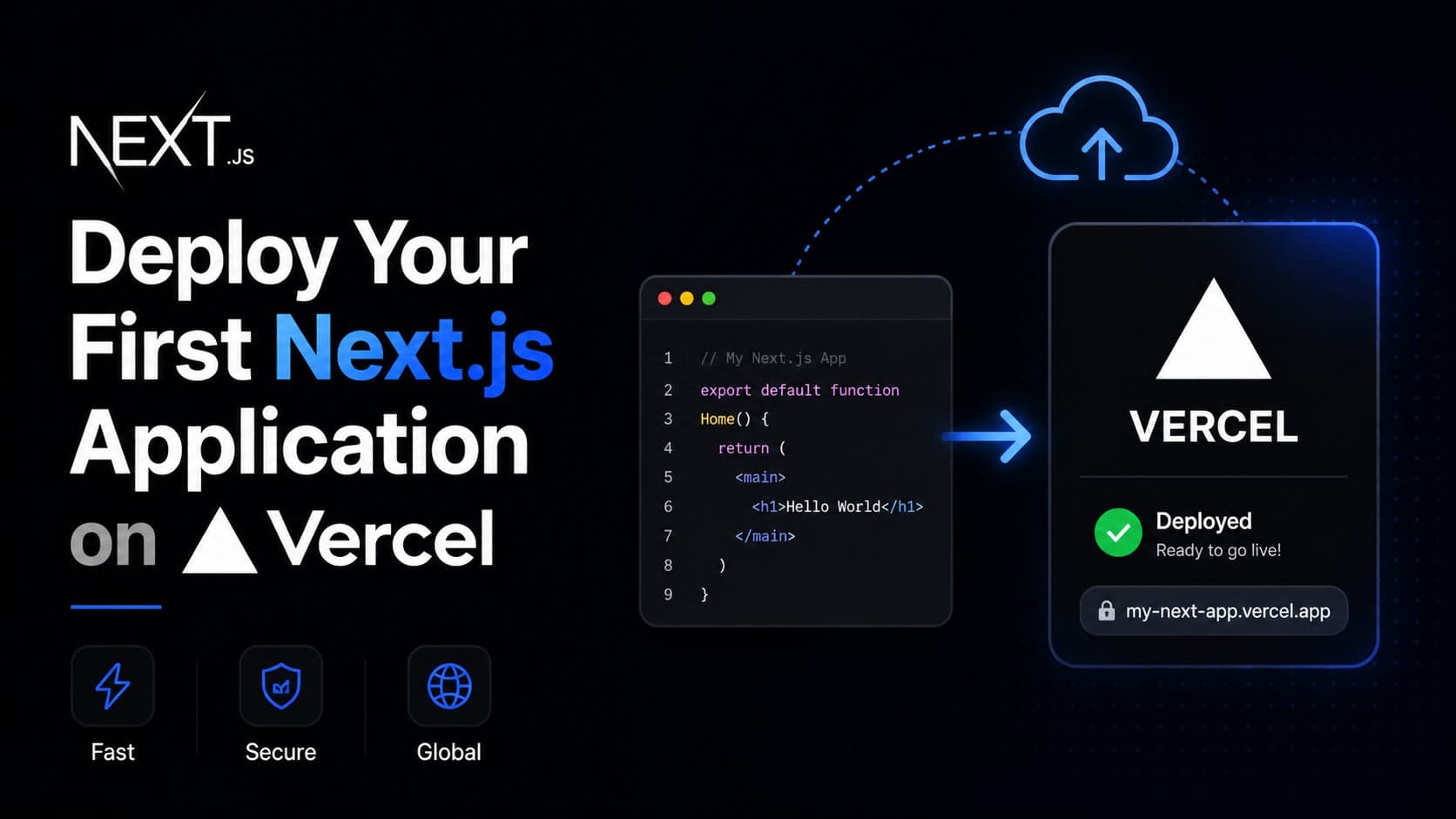
Days 27–28: Deploy on Vercel
Deployment should be boring.
That is why I choose Vercel.
Benefits include:
- Git-based deployments
- Automatic previews
- Global infrastructure
- Excellent Next.js support
Modern Vercel infrastructure is designed to support scalable web applications while maintaining a simple developer workflow.
Once deployed, I connect:
- Custom domain
- Analytics
- Error monitoring
- SEO metadata
Days 29–30: Launch and Get Feedback
This is where most founders hesitate.
Do not.
Launch early.
Launch imperfectly.
Launch anyway.
My first distribution channels would be:
- Product Hunt
- Indie Hackers
- Reddit communities
- X (Twitter)
- Personal network
The objective is not massive growth.
The objective is learning.
Even ten active users can provide enough feedback to dramatically improve the product.
The Biggest Lesson
The biggest advantage of AI is not replacing developers.
It is increasing leverage.
Founders can now accomplish in weeks what previously required months.
ChatGPT helps with research.
Claude improves reasoning and architecture.
Cursor accelerates implementation.
Next.js provides a production-ready framework.
Supabase removes backend complexity.
Vercel simplifies deployment.
Combined, these tools create an incredibly powerful environment for building modern SaaS products.
If I were launching a startup today, I would not spend six months planning.
I would spend 30 days validating, building, shipping, and learning from real users.
Because the fastest path to a successful SaaS is no longer writing more code.
It is getting feedback faster.