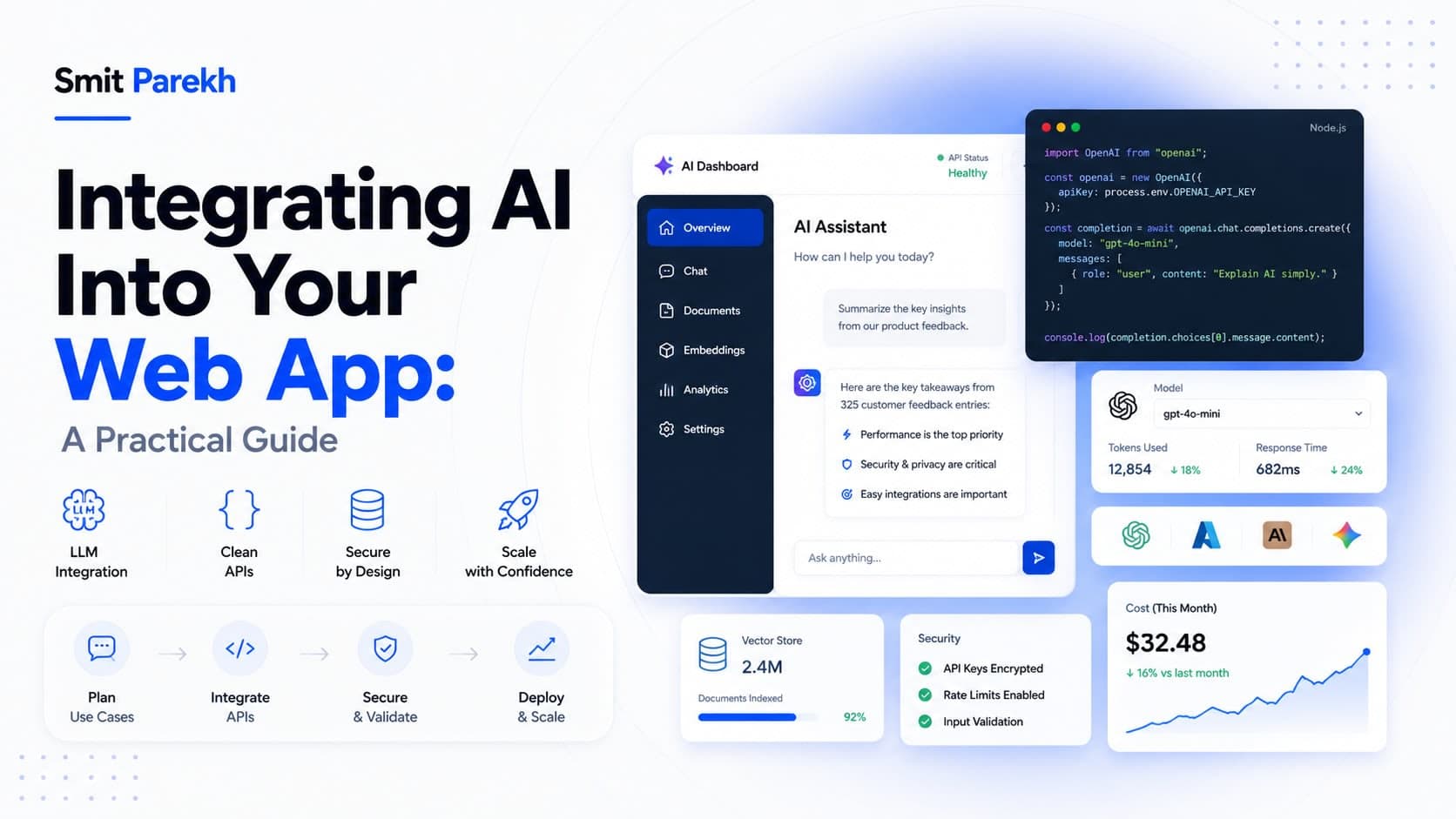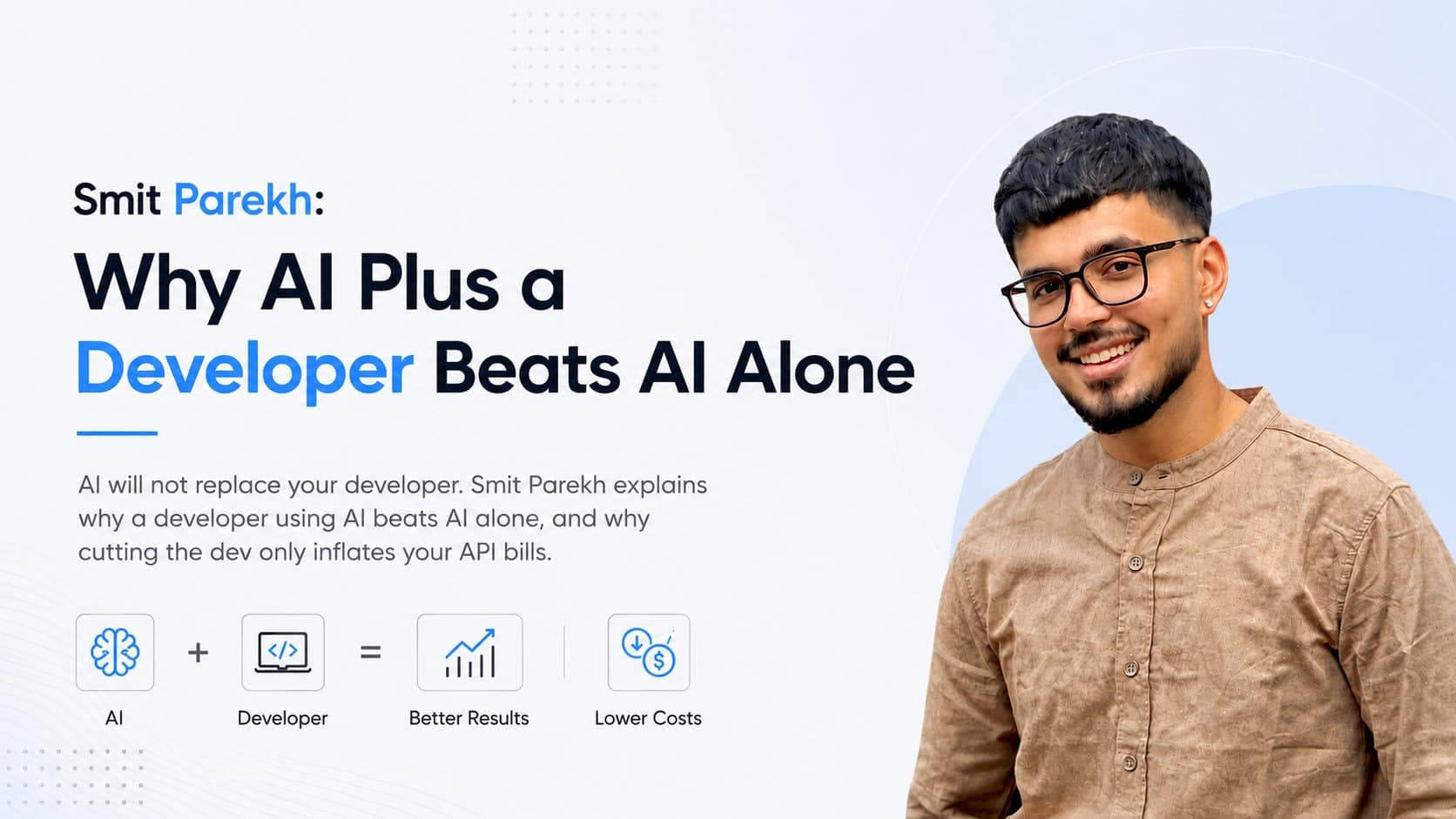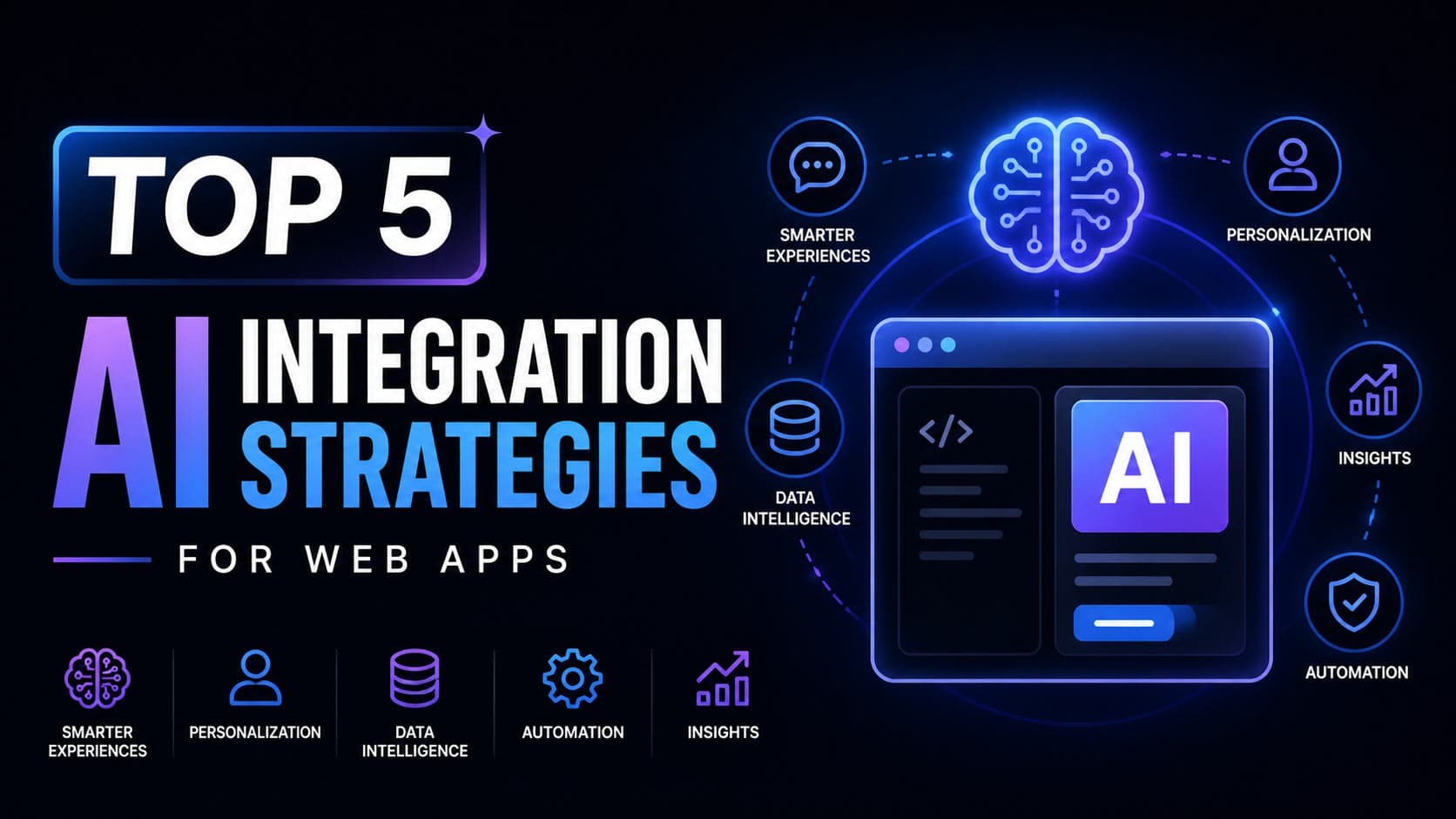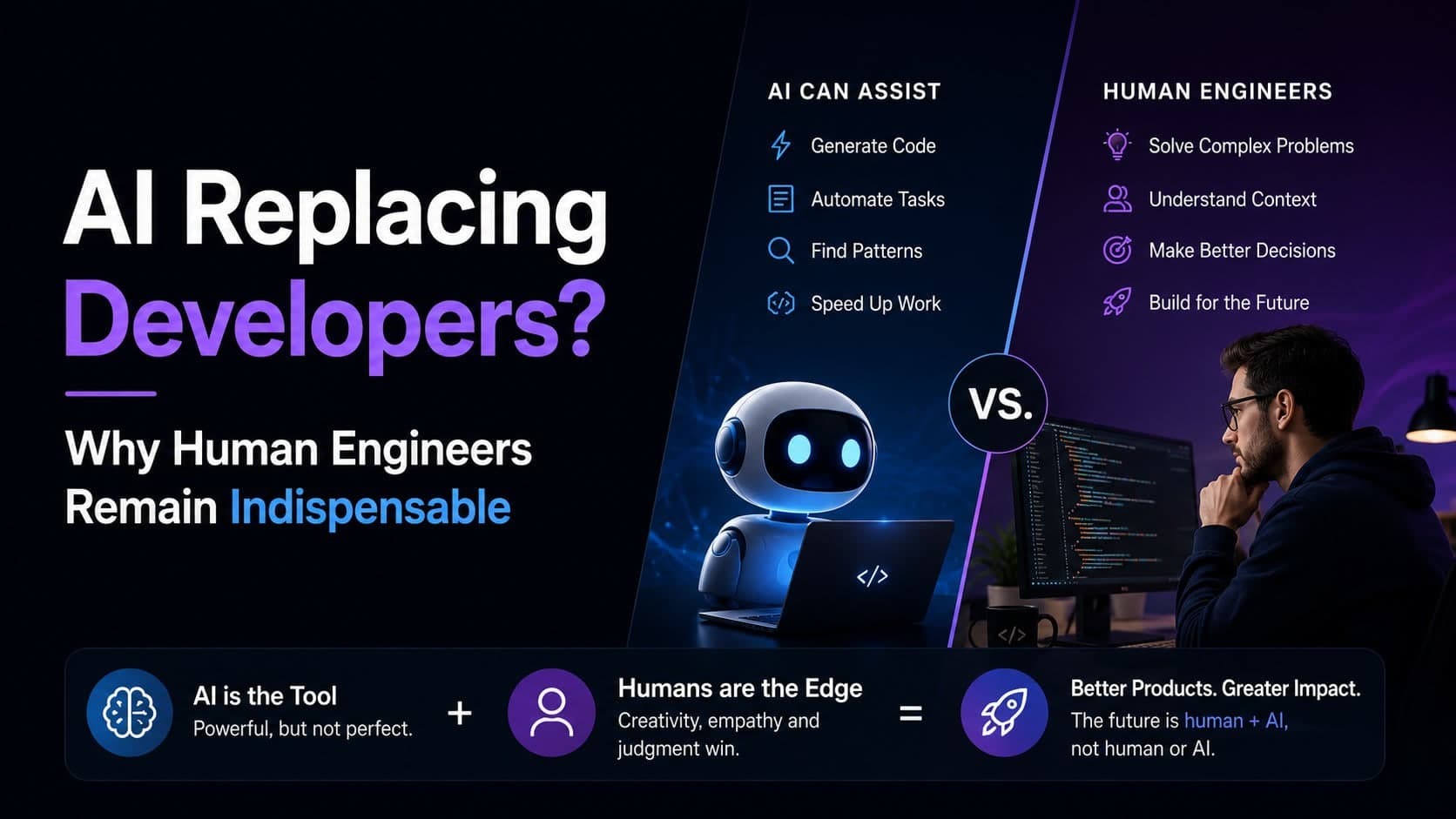
The drumbeat of "AI replacing developers" echoes through tech news and social media feeds, creating anxiety and uncertainty. While AI tools are undeniably transforming our workflows, the reality on the ground for senior engineers, founders, and CTOs is far more nuanced. Building and maintaining robust, scalable production systems still demands a depth of human expertise that goes well beyond what current AI models can provide. This article will explore why the most valuable developers aren't being replaced but are instead leveraging AI to become even more impactful.
TL;DR
- AI's hidden costs and limitations in production outweigh initial code generation benefits.
- Human developers are indispensable for system architecture, complex debugging, and long-term scalability.
- AI excels at augmenting developer productivity, not replacing entire engineering roles.
- Engineers skilled in AI integration, business context, and systems thinking are seeing increased demand.
- The future of software development involves AI-augmented human teams, not fully autonomous AI development.
The Hidden Cost of AI at Production Scale
Initial excitement around AI code generation often overlooks the significant operational costs and complexities that emerge when moving beyond prototypes to production. While a chatbot might effortlessly spin up a FizzBuzz solution or a basic React component, the real-world implications of using AI-generated code at scale are substantial.
Consider the financial aspect. API calls to advanced LLMs (like OpenAI's GPT-4o or Anthropic's Claude 3 Opus) can quickly accumulate. A large codebase frequently reviewed, refactored, or even just analyzed by AI during CI/CD can incur thousands of dollars (USD, CAD, GBP, INR) monthly, far exceeding the cost of well-structured human-written tests and linting. For instance, a medium-sized enterprise project might spend £500-£2000 per month just on AI API usage for code quality checks and suggestions, a cost that rarely drops to zero.
Beyond direct API costs, there's the debugging overhead. AI-generated code, while syntactically correct, often lacks the contextual understanding of an existing complex system. It might introduce subtle bugs, performance bottlenecks, or security vulnerabilities that are incredibly hard to trace. A junior developer might spend days debugging an AI-introduced issue that a senior engineer would spot in minutes due to their deep system knowledge.
Why Human Architects and Debuggers Remain Crucial
Software engineering is more than just writing lines of code; it's about solving problems, designing resilient systems, and anticipating future needs. AI struggles with these higher-order cognitive tasks that are fundamental to a senior developer's role.
System Architecture and Design
Architecting a microservices system, designing a robust data pipeline, or planning for millions of concurrent users requires a holistic understanding of business requirements, infrastructure constraints, and future growth. An AI can suggest patterns, but it cannot truly reason about the trade-offs between, say, event-driven vs. request-response architectures in a specific business context. The choice often depends on factors like team expertise, existing tech stack, budget, and long-term strategic goals – inputs that are inherently human.
Complex Debugging and Root Cause Analysis
When a production system goes down, AI can assist in log analysis or suggest potential fixes. However, isolating the root cause in a distributed system, especially when dealing with race conditions, network latencies, or subtle memory leaks, demands a human's ability to hypothesize, experiment, and connect disparate pieces of information. I've spent countless hours in client projects tracing issues across multiple services, databases, and cloud providers – a task that requires intuition and experience, not just pattern matching.
// Example: A subtle bug AI might miss in a Node.js microservice
// Imagine two services updating the same user profile concurrently.

// user-service.ts
async function updateUserProfile(userId: string, data: Partial<UserProfile>) {
  const user = await db.getUser(userId); // Fetches current state
  // AI might suggest updating directly, but what if 'user' is stale?
  // e.g., another service updated it between fetch and save
  if (!user) throw new Error('User not found');

  // Human insight: Need for optimistic locking or transactions
  const updated = await db.updateUserOptimistic(userId, data, user.version);
  if (!updated) {
    throw new Error('Conflict: Profile updated by another process. Please retry.');
  }
  return updated;
}

// AI might generate a simple db.update() without considering concurrency
// This leads to data loss or inconsistencies in a high-traffic system.
Scalability, Security, and Maintainability
Building a system that scales from hundreds to millions of users, remains secure against evolving threats, and is maintainable by a team over years, demands foresight. AI-generated code often focuses on immediate functionality without deep consideration for future-proofing, performance under load, or adherence to enterprise security policies. Human engineers bake these considerations into the core design, not as afterthoughts.
AI: A Productivity Multiplier, Not a Replacement
Smart engineering teams view AI as a powerful tool to augment human capabilities, not to replace them. Here's how AI is transforming workflows:
- Accelerated Boilerplate Generation: AI can quickly scaffold common components, tests, or API endpoints, freeing developers from repetitive tasks. This is a massive time-saver for Next.js and React developers.
- Intelligent Code Review & Refactoring: AI tools can identify potential bugs, suggest performance improvements, or enforce coding standards during code review, acting as an extra pair of eyes. This is particularly useful for large TypeScript codebases.
- Enhanced Debugging & Error Analysis: AI can process vast amounts of log data, identify patterns, and suggest probable causes for errors, speeding up the debugging process.
- Documentation & Learning: AI can generate initial drafts of documentation, explain complex code snippets, or even act as a personalized tutor for new technologies.
- Test Case Generation: For common scenarios, AI can generate comprehensive unit and integration test cases, improving code coverage.
In essence, AI helps developers move faster on the howso they can focus more on thewhatandwhy. It elevates the role of the developer from a pure coder to a systems thinker, problem solver, and AI orchestrator.
The Evolving Role of the Developer
The market value of developers who understand AI, business context, and systems thinking is rapidly increasing. These are the engineers who can:
- Integrate AI Effectively: Not just use AI, but integrate LLM APIs and AI models into existing full-stack applications to create novel features or optimize internal processes.
- Critically Evaluate AI Output: Discern high-quality, production-ready AI-generated code from inefficient or buggy suggestions.
- Bridge Business and Technology: Translate high-level business requirements into technical architectures, leveraging AI where appropriate.
- Master New Paradigms: Adapt to evolving tools and methodologies, continuously learning and applying new AI-driven approaches.
This shift isn't about replacing engineers; it's about upskilling and evolving the engineering profession. Companies are increasingly looking for technical consultants and senior developers who can navigate this new landscape, not just for coding, but for strategic guidance.
FAQ
Q: Will AI make junior developer roles obsolete?
A: Not entirely. While AI can automate some entry-level tasks, junior roles will likely evolve to focus more on learning AI tooling, integrating AI-generated code, and collaborating with AI systems. Mentorship from senior developers will become even more critical to guide them in understanding broader system context.
Q: How can developers best prepare for this AI-driven future?
A: Focus on strengthening core computer science fundamentals, learning how to effectively prompt and integrate AI tools, understanding system design principles, and developing strong problem-solving skills. Business acumen and communication are also increasingly vital.
Q: Is AI a threat or an opportunity for freelance developers?
A: It's a significant opportunity. Freelance developers who can leverage AI to deliver projects faster, offer AI integration services, or consult on AI strategy will find themselves in high demand. It allows individual contributors to tackle larger, more complex projects efficiently.
Q: What impact does AI have on DevOps and infrastructure?
A: AI is enhancing DevOps by automating incident response, optimizing resource allocation, and predicting system failures. However, designing secure, resilient, and cost-effective cloud infrastructure (AWS, Azure, GCP) still requires deep human expertise in DevOps practices and platform engineering.
Final thoughts
The narrative of AI replacing developers is a simplistic take on a complex technological evolution. While AI is undoubtedly a powerful force, it serves as an amplifier for human ingenuity, not a substitute. The future of software development lies in synergistic human-AI collaboration, where skilled engineers architect, design, debug, and lead, while AI assists with automation and generation. For those building the next generation of digital products, mastering this collaboration is key to unlocking unprecedented productivity and innovation. If you're looking to integrate AI into your full-stack applications, optimize your development workflows with Next.js or Node.js, or need a senior pair of eyes on your system architecture, let's talk.