iOS & Android apps built once, shipped twice
React Native with Expo - one TypeScript codebase, two stores, 60% of the cost of going native. From MVP to production with EAS builds, push notifications, and offline support.
Building separate native apps is rarely justified until you have a team of 10+ engineers. React Native with Expo gives you native performance and platform-specific UI conventions from a single codebase - with the same React patterns your web team already uses. I've shipped apps to both stores and know where the edge cases live.
2
Apps live on App Store & Google Play
~60%
Cost saving vs separate native builds
4.5★
Average store rating on shipped apps
OTA
Over-the-air updates without review delays
Trusted by founders & teams in

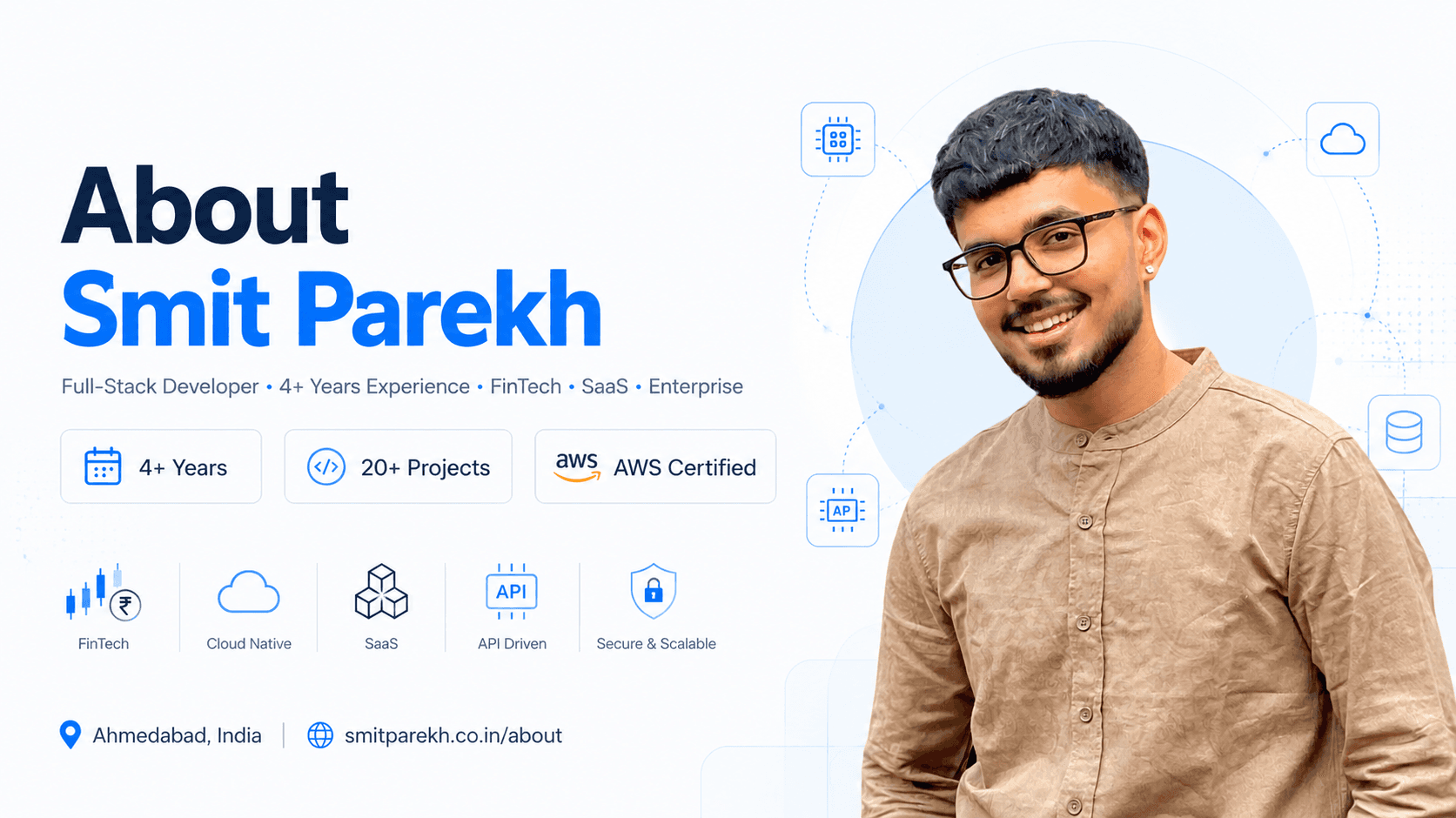
Smit Parekh
Full-Stack Developer
Gujarat, India · available worldwide
I'm the only person who touches your code. You talk directly to the senior developer writing every line - no account managers, no juniors, no handoffs. React, Next.js, Node.js, TypeScript and PostgreSQL, end to end.
- AWS Certified Solutions Architect
- 4+ years shipping production web apps
- 20+ live systems across FinTech, SaaS & AI
Everything included in every engagement
No upsells. No surprise change orders. One scope, one price.
React Native & Expo codebase
TypeScript strict, Expo SDK, and a file-based routing with Expo Router. Clean architecture with separated concerns - UI, state, and API layers don't leak into each other.
iOS & Android native feel
Platform-specific navigation patterns, native gestures via React Native Gesture Handler, and haptic feedback. The app feels at home on both platforms - not like a web view in a shell.
API integration & real-time data
REST or GraphQL API integration with TanStack Query, WebSocket support for real-time features, offline queue for write operations, and optimistic UI updates for instant response.
Push notifications
Expo Notifications wired to your back-end with FCM and APNs. Targeted, scheduled, and silent push notifications - with deep linking so a tap takes the user exactly where they need to be.
Offline support & secure storage
SQLite via Expo SQLite or MMKV for local persistence, AsyncStorage replaced with a typed wrapper, and Expo SecureStore for tokens. The app works on a plane, not just with 5G.
EAS build & App Store submission
Expo EAS for OTA updates and store builds. I handle the Apple Developer Program setup, provisioning profiles, Play Console listing, screenshots, and the review submission. You just approve.
Results that build trust
The numbers behind the work - measured on real production data, not demos.
2
Apps live on App Store & Google Play
~60%
Cost saving vs separate native builds
4.5★
Average store rating on shipped apps
OTA
Over-the-air updates without review delays
The tools I actually use in production
Modern, battle-tested, and chosen for fit - not hype.
App
- React Native
- Expo SDK
- TypeScript
- Expo Router
State & data
- TanStack Query
- Zustand
- MMKV
- SQLite
Backend
- Node.js
- Supabase
- Firebase
- Pusher
Deploy
- EAS Build
- App Store
- Google Play
- OTA updates
How we'll work together
Predictable, written-down, no surprises.
- 01
Scoping & architecture
Define screens, data flow, auth strategy, and offline behaviour. You get a written spec with wireframe-level screen list and API contract before any code is written.
- 02
Core flows first
Auth, primary user journey, and data fetching built and running on a real device. You test the app on your phone within the first week - not a simulator demo.
- 03
Feature build & polish
Screen-by-screen delivery with OTA updates pushed via EAS after each milestone. Animations, haptics, and edge-case handling added in the final sprint.
- 04
Store submission
Screenshots, store descriptions, privacy policy, and compliance checklist. I handle the submission and manage reviewer questions - first-time approval rate is high when metadata is done right.
AWS Certified
Solutions Architect
I'm Smit Parekh - a full-stack developer who writes every single line of your code
With 4+ years of experience shipping production systems for FinTech, SaaS, and AI startups, I work as a senior individual contributor - no juniors on your project, no account managers between you and the work. Every commit, every architecture decision, every deployment lands on my machine first.
I specialise in the TypeScript ecosystem - React & Next.js on the frontend, Node.js / NestJS on the backend, PostgreSQL for data, and AWS for infrastructure. I've built headless e-commerce stores, multi-tenant SaaS platforms, real-time dashboards, AI-powered tools, and performance-first marketing sites. The common thread: clean code, zero tech-debt handover docs, and measurable business results.
10+ production apps shipped
FinTech, SaaS, AI startups & e-commerce
95+ Lighthouse scores, guaranteed
Performance baked in from day one
AWS Certified Solutions Architect
Infrastructure decisions you can trust
Direct, async-first communication
You talk to who writes every line of code
My daily stack
Pricing that matches the work
Starting prices. Final quote in writing after a 30-minute scoping call.
MVP
Founders validating an idea in market
$6,000starting
- iOS + Android from one codebase
- Auth, 3-5 core flows, basic push notifications
- EAS build + store submission
- Delivered in 4-6 weeks
Production App
Startups building a full consumer or B2B app
$15,000starting
- 10+ screens, offline support, real-time features
- Design system + animations
- Backend API or integration with existing API
- Delivered in 8-12 weeks
Retainer
Ongoing feature development after launch
$1,500/mostarting
- Reserved monthly hours
- SDK upgrades & OS compatibility
- OTA updates, bug fixes & new features
- Cancel any time
Me vs. an agency vs. hiring in-house
Three ways to get this built. Here's the honest comparison.
Best value Solo Dev (me) $80-$120 /hr or fixed | Agency $150-$300 /hr blended | In-house hire $80-$120K /yr + benefits | |
|---|---|---|---|
| Start date | 1-2 weeks from quote | 4-8 weeks onboarding | 8-16 weeks to hire |
| Who writes the code | Senior dev - every single line | Junior assigned to your account | Whoever you manage to hire |
| Communication | Direct - you talk to who codes | Via account manager first | Direct, but management overhead |
| Flexibility | Scale up or down any time | Locked to contract length | Fixed headcount, hard to change |
| Code ownership | 100% yours, full handover docs | Depends on contract terms | Yours, but bus factor risk |
| Risk | Weekly demos, fixed scope | Scope creep & handoff gaps | Wrong hire = months lost |
Questions I get asked first
React Native vs native Swift/Kotlin - which should I choose?+
React Native is the right call for most startups: one team, one codebase, 60% of the cost, and near-identical performance for CRUD-heavy apps. Go native if you need deep hardware access (AR, Bluetooth LE, custom camera pipelines) or if your team's background is exclusively iOS/Android.
How long does Apple App Store review take?+
Typically 1-3 days for new submissions, often same-day for updates once the app has history. The most common rejection reasons are missing privacy policy, vague app description, or a broken review account. I prepare everything to avoid those.
Can you add a mobile app to our existing web product?+
Yes - the most common pattern is a React Native app that talks to the same API as your web app. If your web app is in Next.js or React, a significant portion of the business logic and state patterns can be shared.
What's an OTA update and why does it matter?+
Expo EAS lets you push JavaScript bundle updates to users' devices without going through the app store review process. Bug fixes, copy changes, and non-native feature additions can ship in minutes instead of days.
Do you handle backend development too?+
Yes - if you need an API built alongside the app, I can do both. See /services/backend-development or /services/api-development for what that covers. Bundling the two often saves time since API contracts get designed alongside the screens that consume them.
Let's scope your project
Tell me what you're building. I'll reply with a written estimate within 24 hours - no sales call required.
Related services
Often paired with mobile app development.
Web Development
From the database schema to the deployed Next.js frontend, I ship modern web apps designed to rank, convert, and scale. One engineer, full ownership.
Backend Development
Typed Node.js and NestJS APIs with PostgreSQL or MongoDB, Redis caching, structured logs, and the boring discipline that keeps p95 latency under 100ms.
API Development
Well-versioned, well-documented REST or GraphQL APIs with auth, rate limiting, and webhooks. Built to be consumed by partners and customers - not only your own frontend.
SaaS Development
End-to-end SaaS builds with Stripe billing, multi-tenant auth, role-based access, onboarding flows, and admin dashboards - built to take real paying customers.