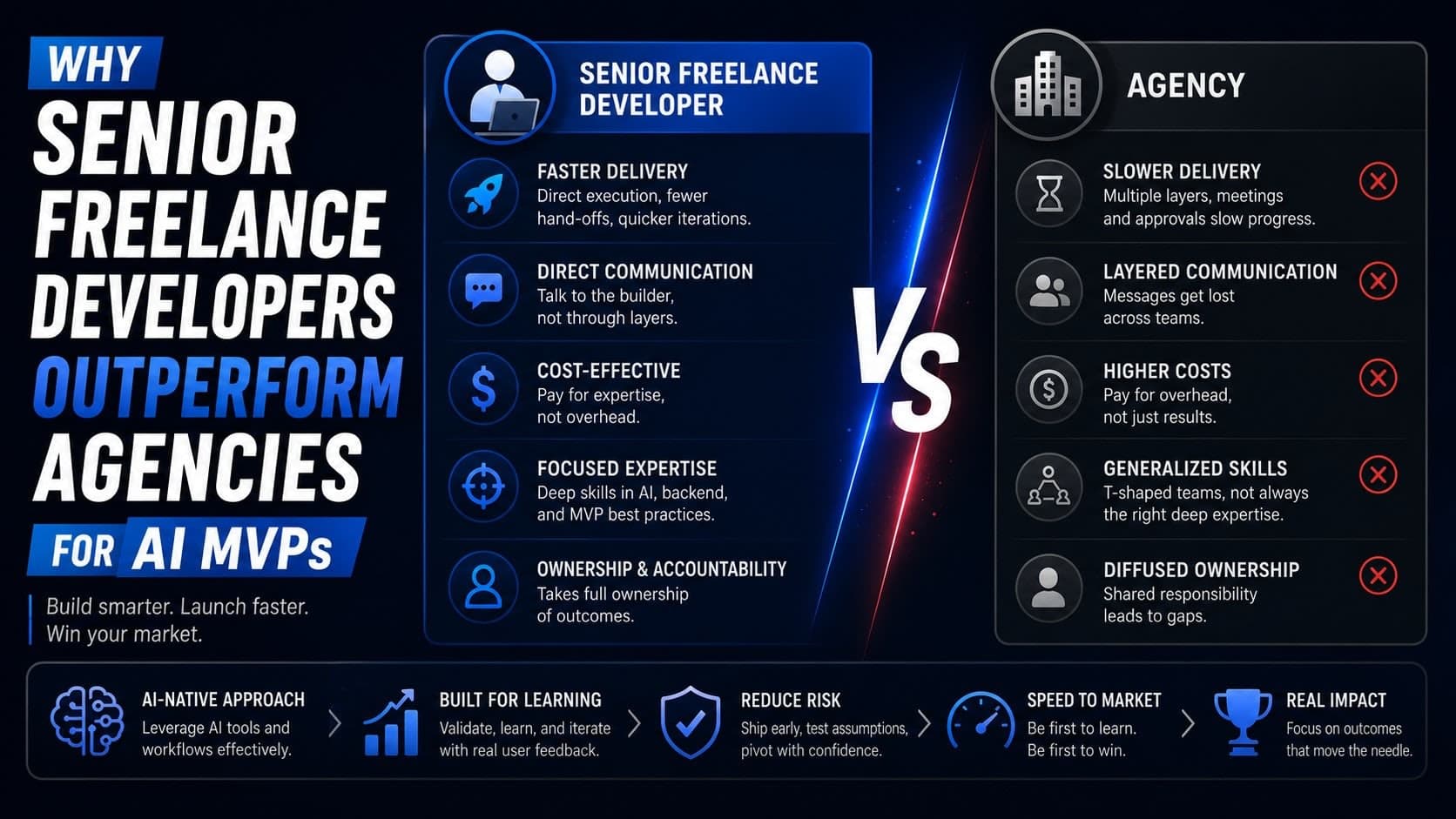
Embarking on a new software project, whether a startup MVP or a complex enterprise system, demands skilled technical leadership. Finding a senior full-stack developer who can architect, build, and deploy robust applications is often the linchpin of success. This isn't just about finding someone who can code; it's about securing a strategic partner who understands the entire development lifecycle.
TL;DR
- Senior full-stack developers offer end-to-end project ownership.
- Look for expertise in modern stacks (e.g., Next.js/React + Node.js/TypeScript).
- Evaluate problem-solving skills, communication, and architectural foresight.
- Understand the value of experience in DevOps and AI integration.
- Consider project scope, budget, and long-term collaboration needs.
The Value of Senior Full-Stack Expertise
A senior full-stack developer brings a holistic perspective to your project. They don't just focus on the frontend or backend in isolation; they understand how all the pieces fit together. This means they can design systems that are scalable, maintainable, and performant from day one. They've likely encountered and solved a wide array of technical challenges, from database optimization to API design and cloud deployment.
In a recent client project developing a real-time analytics dashboard, I leveraged my full-stack experience to bridge the gap between a complex data pipeline (Node.js, PostgreSQL) and a highly interactive frontend (React with state management). This integrated approach ensured efficient data flow and a seamless user experience, something a specialized frontend or backend developer might have struggled to achieve without broader oversight.
Key Skills to Look For
When evaluating candidates to hire a senior full-stack developer, focus on a blend of technical proficiency and soft skills:
Core Technologies
- Frontend: Deep understanding of modern JavaScript frameworks like React or Next.js, including state management (Redux, Zustand), component libraries, and performance optimization.
- Backend: Proficiency in Node.js, with experience in frameworks like Express.js or NestJS. Understanding of RESTful APIs, GraphQL, and asynchronous programming is crucial.
- Databases: Experience with both SQL (e.g., PostgreSQL, MySQL) and NoSQL (e.g., MongoDB, Redis) databases, including schema design and query optimization.
- TypeScript: Essential for large-scale applications, providing static typing for improved code quality and maintainability.
Architectural & Design Patterns
- Understanding of microservices vs. monolithic architectures.
- Experience with event-driven architectures and message queues (e.g., Kafka, RabbitMQ).
- Knowledge of design patterns and SOLID principles.
DevOps & Deployment
- Familiarity with CI/CD pipelines (e.g., GitHub Actions, GitLab CI).
- Containerization technologies like Docker and orchestration with Kubernetes.
- Cloud platform experience (AWS, Azure, GCP).
Problem-Solving & Communication
- Ability to break down complex problems into manageable tasks.
- Clear and concise communication with technical and non-technical stakeholders.
- Proactive identification of potential risks and challenges.
The Modern Stack: Next.js, React, Node.js & TypeScript
For many projects today, a stack built around Next.js (for its server-side rendering, static site generation, and API routes) and React (for its component-based UI) on the frontend, paired with a Node.js backend using TypeScript, offers a powerful and efficient development experience. This combination allows for:
- Full-stack capabilities within a single framework: Next.js API routes can serve as your backend endpoints.
- Improved developer experience: TypeScript catches errors early, making large codebases easier to manage.
- Enhanced performance: SSR and SSG capabilities of Next.js boost initial load times and SEO.
- Code reusability: Sharing logic and types between frontend and backend.
When you hire a senior full-stack developer, you're looking for someone who has not only mastered these tools but also understands their trade-offs and best use cases. For instance, deciding between client-side rendering, server-side rendering, or static site generation with Next.js depends heavily on the project's specific requirements.
Beyond Code: AI/LLM Integration & DevOps
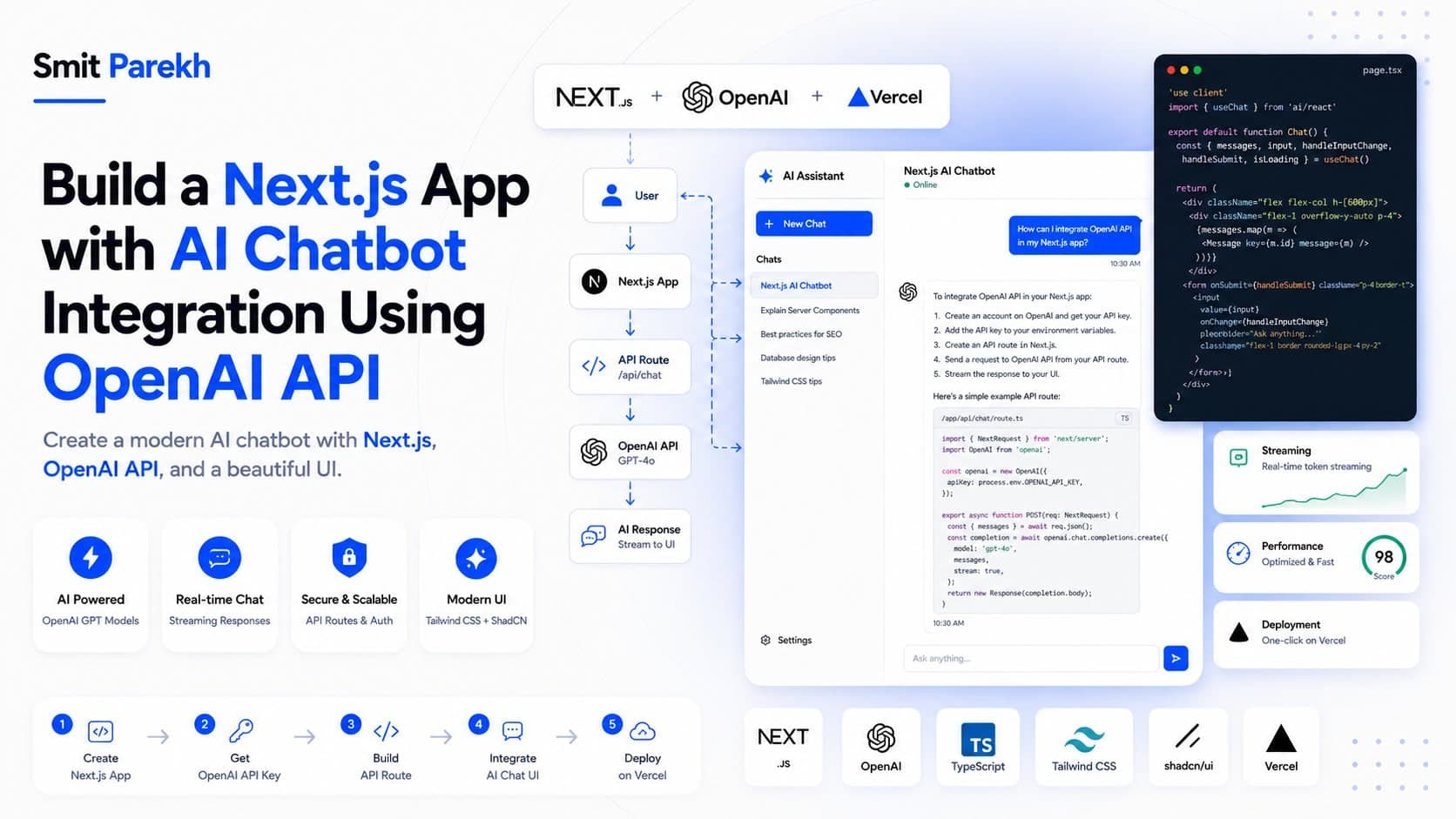
Modern applications increasingly incorporate AI and Machine Learning. A senior developer might also possess experience integrating Large Language Models (LLMs) via APIs (like OpenAI's) or deploying custom ML models. This could involve:
- Building prompt engineering pipelines.
- Fine-tuning models for specific tasks.
- Integrating AI-powered features like chatbots or content generation tools.
Equally important is a strong grasp of DevOps principles. A developer who understands infrastructure as code (e.g., Terraform), monitoring (e.g., Prometheus, Grafana), and automated deployment ensures that the application is not just built, but reliably delivered and maintained in production. This reduces operational overhead and minimizes downtime.
Cost Considerations Across Markets
The cost to hire a senior full-stack developer can vary significantly based on location and experience. Here’s a rough idea:
| Region | Estimated Hourly Rate (USD) | Notes | |-----------------|-----------------------------| | United States | $75 - $175+ | High demand, diverse cost of living | | Canada | $60 - $150+ | Competitive rates, strong tech hubs | | United Kingdom | £50 - £120+ (approx. $65-$160+) | London commands higher rates | | India | $30 - $80+ | Cost-effective, growing talent pool |
These are indicative figures. True value lies in the developer's ability to deliver high-quality work efficiently, saving you time and resources in the long run.
FAQ
Q: What is the difference between a full-stack developer and a senior full-stack developer? A: A senior full-stack developer typically has several years of experience, demonstrating not only breadth across frontend and backend but also depth in architectural design, problem-solving, and leadership. They can mentor junior developers and make strategic technical decisions.
Q: How important is DevOps experience for a full-stack developer? A: It's increasingly important. A developer who understands deployment pipelines and infrastructure can build more robust, scalable, and maintainable applications, reducing friction between development and operations.
Q: Should I prioritize a specific framework like Next.js or React? A: Prioritize the developer's foundational skills (JavaScript, Node.js, architectural principles) and their ability to adapt. Expertise in specific frameworks like Next.js or React is a strong plus, especially if they align with your project's needs.
Q: How can I assess a senior full-stack developer's problem-solving skills? A: Use challenging technical interview questions, ask about past complex problems they've solved, and review their contributions to open-source projects or personal portfolio.
Final thoughts
Choosing to hire a senior full-stack developer is an investment in your project's future. Their ability to navigate the entire development landscape, from concept to deployment and beyond, can significantly de-risk your initiative and accelerate your path to market. They bring not just coding skills, but architectural vision and practical problem-solving.
If you're building something similar and want a second pair of senior eyes, get in touch.